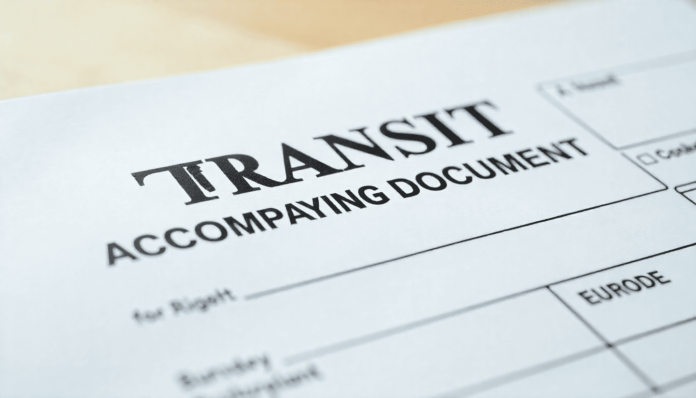
When relocating from the UK to Germany, your shipment will cross customs borders and often requires a T1 transit form. This document ensures your goods can move freely through the EU until they reach German customs for final clearance. In this guide, we’ll explain what a T1 form is, why it’s needed, how to apply, and how it fits into your relocation process.
1) What is a T1 Transit Document?
The T1 form is a transit document issued under the Common Transit Convention (CTC). It allows goods to travel through EU and associated countries without paying customs duties or VAT until they reach the destination customs office.
- ✅ Used for goods leaving the UK and entering Germany.
- ✅ Ensures customs duties are only paid (or exemptions applied) at the final destination.
- ✅ Managed electronically via the New Computerised Transit System (NCTS).
📌 Other related tips: “Moving from the UK to Germany in 2025 (Form 0350 & T1 Guide)”.
2) Why Do You Need a T1 Form for a UK to Germany Move?
Since Brexit, the UK is a non-EU country. That means:
- Every shipment moving from the UK into the EU must be declared at customs.
- The T1 ensures your belongings can travel through transit countries (e.g., France, Belgium, Netherlands) without being taxed multiple times.
- Final clearance happens at your German customs office (Zoll), where Form 0350 can be applied for duty-free import.
💡 Without a T1, your shipment may get stuck at the first EU entry point (Calais, Rotterdam, etc.), leading to delays, fines, and storage costs.
3) Who Issues the T1 Document?
A T1 can only be issued by an authorised consignor with access to the NCTS system. This is usually:
- Your removals company or customs broker.
- Freight forwarders specialising in international moves.
- In some cases, large companies with customs authorisation.
👉 You cannot apply for a T1 form yourself as a private individual.
4) What Documents Are Needed for a T1 Application?
| Document | Why it’s needed | Example |
|---|---|---|
| Packing list | Provides details of goods in transit | Room-by-room inventory |
| Bill of lading / CMR | Confirms transport details | Road or sea freight papers |
| Export declaration from the UK | Proves goods are leaving UK customs | EORI-linked export declaration |
| Proof of residence transfer | Links shipment to duty-free import later | Tenancy agreement, employment contract |
| Form 0350 (Germany) | Needed at destination for duty relief | Submitted at Zoll |
📌 Other related tips: “How to Complete Customs Form 0350”.
5) Step-by-Step: How the T1 Process Works
- Prepare your documents (packing list, tenancy, job contract, vehicle papers).
- Your removals company files an export declaration with UK customs.
- Using NCTS, they apply for a T1 form at departure (e.g., Dover).
- Goods travel sealed under T1 through transit countries.
- At the German customs office of destination, the T1 is closed.
- You or your agent present Form 0350 for duty-free clearance.
💡 Pro tip: Always keep a copy of your MRN (Movement Reference Number) for tracking.
6) Costs of a T1 Document
The cost of a T1 depends on your removals provider. Typical fees:
- £35–£75 per T1 document.
- Additional guarantee deposit may be required (returned once the T1 is closed).
👉 Some premium removals companies include the T1 in their overall quote — always ask in advance.
7) Common Problems with T1 Forms (and Solutions)
❌ T1 not closed at destination → May trigger customs fines. Solution: Ensure Zoll stamps and electronically closes the T1.
❌ Incorrect packing list → Leads to mismatches at customs. Solution: Use a numbered, detailed inventory.
❌ No guarantee lodged → T1 application refused. Solution: Use an experienced broker.
❌ Delays at ports → Missing paperwork causes containers to be held. Solution: Give your agent all documents at least 1 week before shipping.
8) FAQs About the T1 Form
Do I need a T1 for personal household goods?
Yes, unless your goods are cleared immediately at the first EU port (not practical for removals).
Can I issue a T1 myself?
No. Only authorised consignors with NCTS access can.
How long is a T1 valid?
It is valid until your goods arrive and are cleared at the destination customs office.
What happens if the T1 expires?
Customs duties and VAT become payable immediately.
✅ Key Takeaways
- A T1 form is mandatory for moving goods from the UK to Germany.
- It ensures your shipment travels duty-free until German customs clearance.
- Only an authorised consignor (broker or removals company) can issue it.
- Always provide a detailed packing list and keep your MRN safe.
- Without a T1, your goods may be delayed or charged at EU entry points.
📌 For the full relocation checklist, read our Guide: “Moving from the UK to Germany in 2025 (Form 0350 & T1 Guide)”.