Introduction
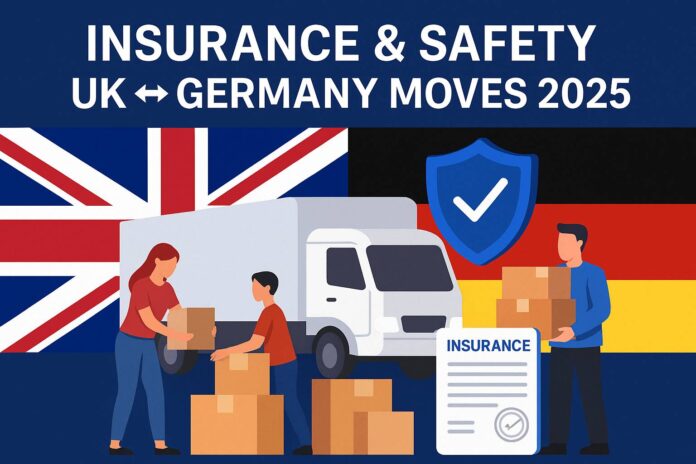
When planning a move between the UK and Germany, most families focus on logistics and costs — but insurance and safety are just as critical.
In 2025, with tighter customs controls, longer border checks, and new risks introduced by Brexit, more moves are delayed, shipments are inspected, and belongings are damaged or lost in transit. Many families only discover at the last minute that their insurance doesn’t cover customs-related risks.
This guide explains:
- The types of insurance policies available for UK ↔ Germany moves.
- What is and isn’t covered in 2025/26.
- Hidden risks that movers rarely explain.
- Real case studies of denied claims.
- How to budget for safety and insurance.
If you’re searching for “moving insurance UK to Germany 2025” or “does moving insurance cover customs delays?”, this article is written for you.
1. Why Insurance Matters More in 2025
Summary: Brexit and EU digitalisation created more choke points in the moving process. Insurance isn’t optional anymore — it’s essential.
- Border delays: ICS2 (EU) and BTOM (UK) checks often cause storage at ports. Insurance may or may not cover associated costs.
- Stricter documentation: Incorrect packing lists can invalidate claims.
- Higher theft & damage risks: The longer goods are stored, the greater the risk.
- Insurance premium hikes: Many movers now require full-value cover (2–3% of declared value).
Case Study:
A UK family moving to Hamburg filed a claim after their goods were damaged in storage during a customs delay. Their claim was rejected because the delay was due to missing customs paperwork — a risk excluded from their policy.
2. Types of Insurance for UK ↔ Germany Moves
Summary: Not all insurance is the same. Understanding the categories helps avoid gaps.
a) Transit Insurance
- Covers damage or loss during physical transport (road, sea, air).
- Usually excludes customs-related storage or administrative delays.
b) All-Risks Insurance
- Covers nearly everything (damage, theft, loss).
- Still may exclude improper packing or restricted goods.
c) Storage Insurance
- Separate cover for goods left in warehouses/ports.
- Essential for moves with uncertain clearance times.
d) Liability Insurance
- Covers movers’ liability if damage is caused by their negligence.
- Often limited to a very low value per kilo.
e) Third-Party Insurance
- Independent policies, often cheaper and broader than mover-provided insurance.
3. What Insurance Doesn’t Cover (2025/26)
Summary: The exclusions matter as much as the cover.
- Incorrect customs declarations → any errors in packing lists/HS codes can void cover.
- Prohibited items (alcohol, plants, certain electronics).
- Delays caused by customs checks (storage/demurrage costs often excluded).
- Pre-existing damage (scratched furniture won’t be covered if not noted at pickup).
- Improper packing (DIY packed goods may not be covered).
Case Study:
A student moving from Manchester to Berlin packed their own boxes. When a box of electronics arrived damaged, the insurer rejected the claim on the grounds of “inadequate packing.”
4. Customs-Related Risks in 2025
Summary: Customs is now the biggest wildcard in relocations.
- ICS2 declarations: Any missing ENS data can delay shipments.
- BTOM risk categories: Plant-based or food items trigger extra checks.
- Value declarations: Under-declaring to save on VAT can backfire — insurers may deny claims.
- Extended storage: Insurers may argue “foreseeable risk” if goods are knowingly shipped with incomplete documents.
5. Hidden Costs of Insurance
- Premiums tied to declared value: 2–3% of shipment value.
- Deductibles/excess: Often £250–£500.
- Extra cover for high-value items (art, jewellery, vehicles).
- Storage add-ons: Charged daily, separate from transit cover.
Case Study:
A family moving from Berlin to London insured their £30,000 shipment. At 3% premium, they paid £900 — plus £250 deductible on a damaged sofa claim. Final compensation was only £1,250, not the full loss.
6. How to Choose the Right Cover
- Ask: Does this policy cover customs-related delays?
- Verify exclusions for self-packed items.
- Always declare high-value goods separately.
- Compare mover-provided vs. independent insurance.
- Check claims history of the mover (bad movers = more rejected claims).
7. Safety Beyond Insurance
Summary: Insurance is only half the equation. Good preparation reduces risk.
- Detailed packing list with HS codes.
- Professional packing service (protects claim validity).
- Photos of valuables before packing.
- Separate essential items (keep passports, electronics with you).
- Track shipments via mover’s portal when possible.
8. Budgeting for Safety & Insurance
- Budget 3–5% of your move for insurance and safety extras.
- Add a buffer for storage fees caused by customs delays.
- Use shared loads for smaller moves but ensure insurance still applies.
- Factor in extra cover for pets or vehicles.
9. Looking Ahead to 2026 & Beyond
- CBAM surcharges may increase appliance values, raising insurance premiums.
- EU digitalisation → zero tolerance for vague packing lists.
- UK–EU negotiations could simplify personal moves, but delays likely.
10. Conclusion
Insurance isn’t an afterthought in 2025/26 — it’s the foundation of a safe UK ↔ Germany relocation. With customs now a major risk factor, families need to budget wisely, choose the right cover, and avoid the traps that leave claims unpaid.
Checklist:
- Always buy full-value cover (2–3%).
- Confirm exclusions, especially customs delays.
- Document goods thoroughly.
- Budget 20% extra for hidden risks.
- Choose movers with proven customs experience.
FAQ
1. Do I need insurance for a small move (1–2m³)?
Yes — small moves are often grouped with others. If another customer’s paperwork causes a delay, your goods are at risk too.
2. Does insurance cover customs delays?
Usually no. Storage and demurrage caused by customs are often excluded. You need separate storage cover.
3. What’s the cheapest way to insure my move?
Compare mover-provided cover with independent third-party relocation insurers.
4. Can I pack my own boxes?
Yes, but insurers may deny claims for damage to self-packed goods.
5. Is pet transport insured?
Not under standard household cover. Pets need specialist relocation insurance.