Moving between the UK and Germany in 2025 is no longer a simple move — it’s a strategic operation combining HR mobility, tax law, and bureaucratic compliance.
This Relocation Strategy Master Guide brings together every element of your cross-border transition — from visas and contracts to banking, health insurance, and family integration.
If you’re relocating for work, corporate assignment, or personal life change, this guide forms the strategic pillar that ties together our entire UK ↔ Germany ecosystem:
👉 UK ↔ Germany Customs Master Guide 2025
👉 Moving from Germany to the UK – Ultimate Guide 2025
👉 Moving from the UK to Germany – Customs & Costs 2025
1️⃣ The New Era of UK ↔ Germany Relocation
Brexit transformed the EU–UK relationship from free movement to regulated mobility.
Both corporate and private relocations now require formal visas, customs documents, and tax registration in each country.
| Area | Pre-Brexit | Post-Brexit (2025) |
|---|---|---|
| Right to work | Automatic | Visa / residence permit needed |
| Customs | Open EU border | T1 / Form 0350 required |
| Health coverage | EHIC valid | New S1 / German GKV needed |
| Tax reporting | Single country | Dual filing + DTA applies |
For businesses, that means new mobility compliance under HMRC and Finanzamt rules.
For individuals, it means mastering Anmeldung, Steuer-ID, and Rundfunkbeitrag before settling in.
🔗 Official sources: GOV.UK – Living in Germany | BAMF – Residence and Integration
2️⃣ Corporate vs Personal Relocation
Relocations fall into two distinct models — each with different responsibilities and cost structures.
| Type | Managed By | Who Pays | Typical Duration | Includes |
|---|---|---|---|---|
| Corporate Assignment | HR / Global Mobility team | Employer | 1–5 years | Visa, housing, tax equalization, allowances |
| Personal / Private Move | Individual | Self-funded | Permanent / open | Visas, housing, self-managed tax |
Corporate relocations are governed by HR mobility policies that dictate allowances, insurance, and repatriation rights.
Private expats carry those costs independently and must learn local bureaucracy first-hand.
🔗 Related: Corporate Relocation Guide 2025 – Moving Employees Between the UK and Germany
3️⃣ HR Mobility Strategy for Corporate Transfers
A compliant corporate transfer in 2025 demands coordination between UK HR, German payroll, immigration advisors, and tax consultants.
3.1 Contract Structures
- Secondment – Employee remains on UK payroll, temporarily assigned to Germany.
- Local Hire – Employee switches to German contract and payroll.
- Hybrid / Split Contract – Portions of work and salary allocated to both jurisdictions.
3.2 Tax Equalization & Allowances
| Benefit | Corporate Coverage | Tax Treatment |
|---|---|---|
| Housing allowance | Usually covered | Taxable in Germany |
| Relocation costs | Reimbursed with receipts | Often tax-free |
| School fees | 50–100 % covered | Taxable fringe benefit |
| Home leave flights | 1 per year | Tax-free if policy filed |
🔗 Related: Employee Relocation to the UK from Germany – Visa, Costs & Checklist
3.3 HR Documentation Checklist
- Assignment Letter + Job Description
- Visa support letter + immigration paperwork
- Salary calculation sheet + tax summary
- Relocation allowance policy
- Health insurance confirmation
📎 Official references: Deloitte Global Mobility Trends 2025 | PwC International Assignments Policy 2025
4️⃣ Housing & Anmeldung – Your First German Requirement
In Germany, residence registration (Anmeldung) is the gateway to nearly all other services.
You must register within 14 days of moving into your new home.
Documents required:
- Passport or national ID
- Rental contract
- Wohnungsgeberbestätigung (landlord confirmation)
- Completed Anmeldeformular
Once you register, the Bürgeramt automatically triggers your Steuer-ID (see next section).
Failure to register can block bank accounts and insurance applications.
🧭 Pro Tip: Book your Bürgeramt appointment online before arrival – slots fill weeks in advance.
🔗 Related: German Anmeldung Explained for Expats – Step-by-Step Guide
5️⃣ Financial Setup – Steuer-ID and Bank Accounts
5.1 Steuer-ID (Tax Identification Number)
- Automatically mailed within 2 weeks of Anmeldung.
- Required for employment, tax filing, and health insurance.
- Format: 11-digit number issued once for life.
🔗 Related: German Tax ID (Steuer-ID) Explained for Expats 2025
5.2 Banking for Expats
Opening a German bank account requires:
- Valid passport + residence registration (Anmeldung)
- Proof of income or employment contract
- Initial deposit (€10 – €50 depending on bank)
Digital bank options (2025): N26, Wise, Revolut, Deutsche Bank online Konto.
EU and non-EU residents face different KYC checks post-Brexit — expect video identification calls.
🔗 Related: Banking in Germany for Expats – How to Open a Bank Account in 2025
🧾 External sources: BaFin – Financial Regulations
6️⃣ Health Insurance in Germany – GKV vs PKV
Health insurance is mandatory for everyone living or working in Germany.
You cannot complete Anmeldung without proof of coverage.
| System | Who Qualifies | Cost Range (2025) | Key Benefits |
|---|---|---|---|
| GKV (Public Health Insurance) | Employees earning < €69 300 p.a. | ~14.6 % of income | Family coverage included |
| PKV (Private Insurance) | Self-employed / high earners | €350 – €850 monthly | Custom plans + faster appointments |
If you’re transferring from the UK NHS, you may use Form S1 to join GKV temporarily.
Employers typically deduct contributions directly from payroll.
🔗 Related: Health Insurance in Germany for Expats – Complete Guide 2025
Official reference: GKV-Spitzenverband – Public Health System
💬 FAQ
Q: Do I need health insurance before Anmeldung?
A: Yes. Proof of coverage is required to complete your residence registration.
Q: How long does it take to receive a Steuer-ID?
A: Usually 10–14 days after you register your address.
Q: Can my UK employer cover German health insurance?
A: Yes, through corporate relocation allowances or HR mobility contracts.
🏠 7️⃣ Rundfunkbeitrag – The German Broadcasting Fee
One of the most overlooked yet mandatory parts of German life is the Rundfunkbeitrag, or broadcasting fee.
Every household — whether owned, rented, or sublet — must pay this contribution, which funds Germany’s public broadcasters ARD, ZDF, and Deutschlandradio.
| Category | Details (2025) |
|---|---|
| Monthly Fee | €18.36 per household |
| Collected By | Beitragsservice (ARD, ZDF, Deutschlandradio) |
| When to Register | Within 4 weeks of Anmeldung |
| Payment Method | SEPA direct debit or quarterly invoice |
| Penalty for Non-Registration | Backdated charges + fines up to €300 |
Many expats mistakenly believe this is optional or tied to TV ownership — it’s not. The obligation exists per household, not per device.
Students sharing a flat pay collectively (one contribution covers all registered occupants).
🧭 Pro Tip: Register directly after your Anmeldung to avoid backdated invoices.
🔗 Related: Rundfunkbeitrag Germany for Expats – 2025 Guide
🔗 Official Site: www.rundfunkbeitrag.de
💼 8️⃣ Employment Contracts, Payroll & Worker Rights
Germany’s labor laws are detailed and employee-focused.
Contracts (Arbeitsvertrag) must outline working hours, pay structure, notice periods, and benefits.
| Aspect | Germany | UK |
|---|---|---|
| Minimum notice | 4 weeks | 1 week after 1 month service |
| Annual leave | 20 days (min), 25–30 typical | 28 days (including bank holidays) |
| Working hours | 35–40 hours/week | 37–40 hours/week |
| Sick pay | 6 weeks full pay | 28 weeks statutory pay |
| Termination protection | Strong | Moderate |
Probation Period (Probezeit):
Usually 6 months. During this time, both sides can terminate the contract with 2 weeks’ notice.
Payroll Structure:
German salaries are quoted gross. Employers deduct:
- Income tax (Lohnsteuer)
- Social insurance (approx. 19–21%)
- Health + pension contributions
Foreign workers are typically taxed as limited residents until they establish full residency.
🔗 Related: Employment Contracts in Germany for Expats – 2025 Guide
🔗 External: Bundesagentur für Arbeit – Employee Rights
🧮 9️⃣ Taxation Rules & Double Taxation Agreements (DTA)
Tax residency determines where you must declare and pay taxes.
The UK–Germany Double Taxation Agreement (DTA) ensures you’re not taxed twice on the same income.
| Scenario | Where You Pay Tax | Notes |
|---|---|---|
| Living & working in Germany | Germany | UK exempts this income |
| Living in UK, working in Germany | Both (partial) | Offset via DTA credit |
| Remote work from UK for German firm | UK | Employer must register in UK for PAYE |
| 6-month assignment (183 days rule) | UK | If paid by UK employer, under 183 days |
Tax Filing Basics:
- File annual Einkommensteuererklärung (income tax return).
- Deadline: 31 July (or 28 Feb with accountant).
- Tax classes (Steuerklassen) determine deduction levels — Class III/V for married couples often most advantageous.
🔗 Official Resources:
🔗 Related: Corporate Relocation Guide 2025 – Tax Strategy Section
👨👩👧👦 10️⃣ Family & Dependents – Schools, Spouses, and Integration
Relocating a family across borders adds emotional and administrative complexity.
Germany’s social infrastructure supports dependents well, but timing and preparation are key.
10.1 Schooling Options
| Type | Language | Typical Annual Cost | Notes |
|---|---|---|---|
| Public (Staatlich) | German | Free | Local integration focus |
| Bilingual | German + English | €4,000–€8,000 | Common in major cities |
| International (IB curriculum) | English | €10,000–€20,000 | Ideal for short assignments |
International schools exist in Berlin, Munich, Frankfurt, and Hamburg — often with waiting lists, so apply early.
10.2 Spousal Visas & Employment
Spouses of visa holders may apply for dependent residence permits, granting work rights in most cases.
EU Blue Card holders’ families can work immediately upon arrival.
10.3 Integration & Language
The Integrationskurs (integration course) offers 600 hours of German language and 100 hours of civic orientation.
Courses are subsidized by the BAMF.
🔗 External: BAMF – Integration Courses
🔗 Related: Expat Essentials Germany 2025
🏦 11️⃣ Cost of Living & Allowance Structuring
Germany remains more affordable than the UK, though inflation in 2024–2025 has closed the gap.
Understanding cost differentials helps HR set accurate allowances and helps individuals budget realistically.
| Category | Germany (€) | UK (£) | Comment |
|---|---|---|---|
| Rent (1-bed city centre) | 1,200 | 1,600 | Berlin vs London |
| Utilities | 250 | 300 | Energy transition stabilizing costs |
| Groceries (monthly) | 400 | 500 | Germany cheaper on basics |
| Public Transport | 70 | 160 | 49€ Deutschlandticket helps |
| Health Insurance | 450 | NHS | NHS free but less flexible |
| Childcare | 300–600 | 900+ | Big gap in affordability |
11.1 Allowance Design (Corporate)
HR relocation packages typically include:
- Housing support
- Schooling allowance
- Relocation expense reimbursement
- Travel + home leave allowance
- Tax equalization
🔗 Related: Corporate Relocation Guide 2025
🔗 Related: Real Costs of Moving UK ↔ Germany 2025
💡 12️⃣ Expat Essentials Recap – Your Bureaucratic Toolkit
Every successful relocation depends on completing the five core administrative steps:
| Step | Task | Linked Resource |
|---|---|---|
| 1 | Anmeldung (Address registration) | German Anmeldung Guide |
| 2 | Steuer-ID (Tax ID) | German Tax ID Guide 2025 |
| 3 | Bank account setup | Banking in Germany 2025 |
| 4 | Health insurance registration | Health Insurance Guide 2025 |
| 5 | Rundfunkbeitrag registration | Broadcasting Fee Guide 2025 |
These five processes form the foundation of legal residency and tax compliance in Germany.
Missing any of them may block salary payments, tax registration, or even visa extensions.
💬 FAQ
Q: Is Rundfunkbeitrag mandatory for all expats?
A: Yes, every registered household must pay, regardless of media usage.
Q: Can spouses work in Germany on a dependent visa?
A: Yes, most family reunification permits include employment rights.
Q: What’s the difference between public and private health insurance?
A: Public (GKV) is income-based and family-inclusive; private (PKV) is contract-based with premium flexibility.
🌍 13️⃣ Corporate Policy Trends in 2025
Corporate mobility between the UK and Germany has evolved into a data-driven, compliance-heavy operation.
HR departments now design relocation policies around sustainability, digitalization, and tax equalization.
13.1 Sustainability & ESG in Relocation
ESG (Environmental, Social, Governance) now extends to mobility planning.
Companies are measured not only on carbon footprint but also ethical relocation practices.
| ESG Trend | Example | Impact |
|---|---|---|
| Carbon reduction | Using groupage/shared transport | -15% CO₂ footprint |
| Local sourcing | German housing + local movers | Strengthens local economy |
| Paperless HR workflows | Digital contracts & visas | Compliance & efficiency |
| Equal access | Family/spouse career support | Improves retention |
🧭 Pro Tip: Add a “Green Mobility Clause” in relocation contracts to show compliance with corporate ESG standards.
🔗 Related: Corporate Relocation Guide 2025 – Moving Employees Between the UK and Germany
13.2 Remote & Hybrid Relocation
Since 2024, the remote-first relocation policy has become standard in EU–UK mobility.
Employees relocate legally but work partially remote for tax optimization.
Key HR Challenges:
- Payroll location vs work location mismatch
- Permanent establishment risk for UK companies with DE-based employees
- Split taxation compliance
🧩 Example:
A UK engineer relocates to Berlin under a remote policy → still paid from UK payroll but must register Steuer-ID in Germany due to >183 days stay.
🔗 Official guidance: HMRC – Residence, Domicile and Remittance Basis Manual
🔗 External: OECD Guidelines for Cross-Border Remote Work 2025
13.3 Compensation Benchmarking
Companies now use cost-of-living indexes to maintain purchasing power parity between London and German cities.
| City Pair | Cost Adjustment (2025) | Notes |
|---|---|---|
| London → Berlin | -15% | Lower housing cost |
| Manchester → Munich | +5% | High rent in Munich |
| Edinburgh → Frankfurt | Neutral | Similar cost base |
HR software like Mercer or ECA International calculate “Mobility Allowance Differentials” to ensure fairness.
Detailed corporate and personal relocation cost comparisons are in our Budgeting & Costs Master Guide (UK ↔ Germany 2025).
📦 14️⃣ Integrating Relocation with Customs & Logistics
Relocation doesn’t end at the HR desk — customs and logistics define whether the physical move succeeds.
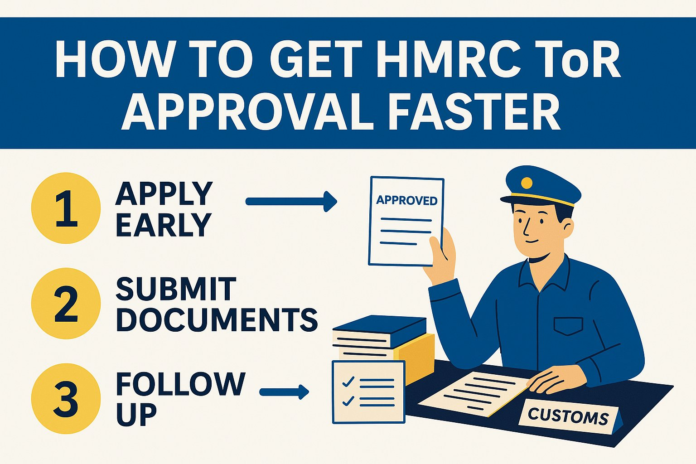
A strategic move must coordinate customs paperwork (ToR1 / Form 0350) with HR timing, housing readiness, and visa status.
14.1 Customs Documents Overview
| Document | Purpose | Who Prepares It |
|---|---|---|
| ToR1 (UK)** | Transfer of Residence relief | HMRC / UK broker |
| Form 0350 (Germany)** | Duty-free household import | Zoll / German broker |
| BC-EAD** | Export document Germany → UK | Customs agent |
| T1** | Common Transit from UK → EU | Broker or moving company |
🔗 Related:
14.2 HR + Customs Coordination Timeline
| Stage | Responsible | Action |
|---|---|---|
| Pre-move | HR Mobility | Draft relocation letter + visa |
| 8 weeks before | Mover / Broker | Prepare Form 0350 / ToR1 |
| 4 weeks before | Employee | Submit inventory + packing list |
| Moving week | Broker | Issue MRN / customs clearance |
| Arrival | Employee | Register Anmeldung + receive Steuer-ID |
🧭 Pro Tip: Keep all customs documents inside your HR relocation folder — they’re required for tax audits or visa renewals.
📅 15️⃣ The 2025 Relocation Timeline
This timeline shows the optimal 6-month relocation flow, adaptable for corporate and personal moves.
| Phase | Timeframe | Core Tasks |
|---|---|---|
| 6 months before | Job offer & policy review | HR contract, cost projection |
| 3 months before | Visa & permit applications | Family document collection |
| 2 months before | Book removals & insurance | ToR1 / 0350 prep |
| 1 month before | Housing & Anmeldung prep | Register Rundfunkbeitrag |
| Moving week | Shipment & travel | Customs documents, insurance |
| Arrival week | Register address & tax | Steuer-ID, health insurance |
| 1–2 months post-move | Family setup | Schools, spouse work permits |
🔗 Related: Moving UK → Germany 2025 Checklist
❓ 16️⃣ Extended FAQ
Q1. Do UK citizens need a visa to live in Germany in 2025?
Yes. Post-Brexit, a residence permit or EU Blue Card is mandatory for stays beyond 90 days.
Q2. Can relocation costs be tax-deductible in Germany?
Yes — if job-related, they qualify as Werbungskosten (work-related expenses).
Q3. What happens if I don’t register Anmeldung?
You cannot open a bank account, get a Steuer-ID, or sign an employment contract legally.
Q4. Can HR pay for my spouse’s travel?
Yes, under “family assistance” in corporate relocation policy.
Q5. How long can the customs process delay a move?
2–7 days, depending on document completeness and shipment volume.
Q6. What’s the fastest relocation route?
Hybrid relocation — digital HR onboarding + physical customs preclearance.
📘 17️⃣ Official References & Verification
- GOV.UK – Working Abroad: UK Employees
- HMRC – Transfer of Residence Relief
- BAMF – Family Reunification & Integration
- Zoll.de – Customs for Private Moves
- GKV-Spitzenverband – Health Insurance Law
📚 18️⃣ Relocation Glossary (Quick Reference)
| Term | Definition |
|---|---|
| Anmeldung | Mandatory residence registration within 14 days |
| ToR1 | UK “Transfer of Residence” form for duty-free imports |
| Form 0350 | German customs declaration for personal effects |
| GKV / PKV | Public vs private German health insurance |
| Steuer-ID | German tax identification number |
| BC-EAD | Export accompanying document for EU–UK moves |
| Rundfunkbeitrag | Compulsory German broadcasting fee (€18.36/month) |
| Integration Course (BAMF) | Government-subsidized language + civics program |
🧩 19️⃣ Final Conclusion – Relocation as a Long-Term Strategy
Relocation between the UK and Germany is no longer a simple logistics exercise — it’s a strategic life operation.
Your success depends on integrating three domains:
- HR & Compliance → visas, contracts, payroll, taxation.
- Bureaucracy & Residency → Anmeldung, health insurance, banking, broadcasting fees.
- Logistics & Customs → ToR1, Form 0350, insured transport, digital inventory.
If you follow this Relocation Strategy Master Guide and the linked resources below, you’ll possess the most comprehensive relocation framework online — whether for corporate HR planning or private expat transition.
📚 Related Reading:
Corporate Relocation Guide 2025
Health Insurance in Germany for Expats 2025